
You have said yes to a life together. Now you want to know what makes your marriage official, without turning this joyful season into a maze of paperwork. That is a practical question, and getting it answered early gives you more room to enjoy the celebration.
For an adult couple planning a wedding in Utah, the basic path is straightforward: obtain a valid marriage license, have a legally authorized person perform the ceremony, meet the witness requirements, and make sure the completed record reaches the issuing county. Your ceremony can still reflect your language, your values, and the love that brought you here.
Start with the ceremony you actually want
Before opening an application, decide where you intend to marry, your approximate date, and whether the ceremony will be in person. A private gathering and a large celebration both deserve thoughtful preparation. A beautiful venue does not replace the legal steps, and a marriage license does not reserve an officiant.
Write a short plan with your names, location, preferred language, expected guests, and the person handling each task. Keep this separate from the larger reception checklist. It becomes much easier to see what is essential when flowers, catering, and seating arrangements are no longer competing with your marriage paperwork.
Choose your county's application process
Utah marriage licenses are issued by county clerks. Procedures and fees vary, so start with the official website of the county you choose. Do not assume instructions from a wedding forum apply to every county.
Salt Lake County currently directs couples to schedule an appointment, submit the application online, and attend together with valid identification. Its instructions also address documentation for a recent divorce. Utah County offers a digital application with identity verification as well as an in-person option. Follow the process for your issuing county rather than mixing the two.
Use your legal information consistently. Check spelling, birth information, and requested documents before submitting. If a prior marriage, identification issue, or other circumstance makes a question unclear, ask the clerk before paying or guessing.
Time your license around your wedding date
A Utah marriage license must be used within 32 days after issuance, and there is no waiting period before it can be used. That means applying many months ahead can be too early, even when you book your vendors months ahead.
Put the application task on your calendar with enough time to resolve identification or appointment issues. Utah County recommends applying about 10–15 days before the wedding. Treat that as its practical guidance, then account for your own circumstances and county process.
Check the actual issue date and expiration information when the license arrives. If your wedding date changes, confirm that the license will still be valid. Keep the official instructions where both of you can find them.
Confirm your officiant and two adult witnesses
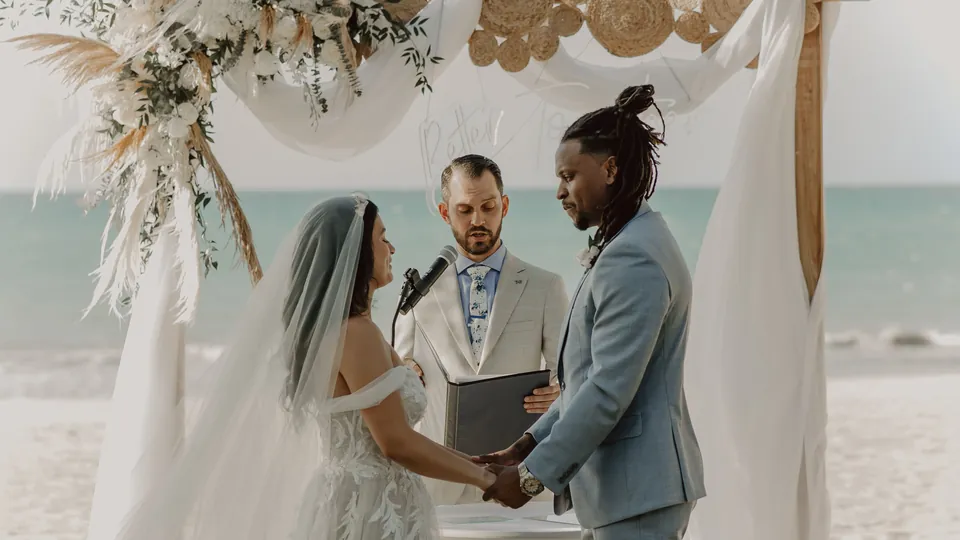
Your officiant must have legal authority to solemnize the marriage. Utah County explains the recognized categories, including authorized ministers and certain public officials. For a Utah license, the officiant must be physically in Utah during the ceremony.
Plan for two witnesses who are each at least 18. They need to witness your declarations of intent and the officiant's pronouncement. Tell them their role in advance, arrange their arrival, and give the officiant their correct names.
I am Elsa Noemy, an ordained minister through American Marriage Ministries since January 19, 2017. When we talk about your wedding, we can discuss both the meaning of your ceremony and the practical details that help you arrive prepared. Ask about your date, location, and language needs early.
Make the ceremony personal while keeping the essentials
You can discuss personal vows, family participation, meaningful readings, and a ceremony in English, Spanish, or both. Share what you want your guests to feel and what you want to remember. You do not need to perform someone else's idea of romance.
At the same time, your ceremony must include the required legal elements. Your personal vows can sit alongside the clear declarations of intent and pronouncement. An officiant can help keep those pieces organized while allowing your voice to lead.
For example, you might choose a bilingual welcome, a short account of your relationship, your own promises, and a family blessing. Decide which parts matter most rather than adding every tradition you have ever seen.
Make a plan for the completed marriage record
The ceremony is one step; recording the completed paperwork is another. The officiant must return the completed marriage information to the issuing county within 30 days of the ceremony. Utah County uses an electronic officiant submission for its digital licenses.
Before the wedding, confirm who has the license or digital link and how you will know submission is complete. Afterward, ask the issuing county how to obtain the certified copies you need. Keep those copies with other important household records, and check each organization's requirements before arranging any name changes.
Resolve special circumstances before the wedding week
This guide focuses on adults marrying in person in Utah. A marriage involving a minor has additional requirements. Remote ceremonies also have specific rules, and recognition outside the United States can raise separate questions. These situations deserve direct guidance from the county and, when needed, an appropriate legal professional.
Do not let an unanswered question linger until you are dressed for the ceremony. Create one shared note for open items, send precise questions, and save the county's replies. A little organization now can protect the attention you want to give each other on the day.
Prepare for the life after your wedding
Alongside your ceremony plans, schedule a relaxed conversation about your household budget, existing debt, and the goals you want to build together. Understanding your individual credit can make that discussion more concrete. It is a separate choice from the marriage license process.
If you want a regular way to stay engaged with your credit, sign up for SmartCredit today. Bring what you learn into a conversation grounded in teamwork, not judgment. You are preparing for a shared future, one intentional step at a time.
When you are ready to plan the ceremony itself, reach out with your date, location, and vision. We can begin with the details that matter most to you and create a clear next step.
Questions you may still have
Can we get married the same day we receive a Utah marriage license?
Utah has no waiting period after issuance. You still need a valid license, an authorized officiant, the required witnesses, and a ceremony that meets Utah requirements. Appointment and officiant availability are separate.
Do we need to apply in the same Utah county where we marry?
A Utah county-issued license can be used for a qualifying ceremony in Utah. Follow the issuing county’s instructions, including how the completed record is returned.
Can our Utah ceremony be in English and Spanish?
You can plan a bilingual ceremony with your officiant. Make sure both partners understand the declarations they are making and that all required legal elements are included.